My Highlight Time is a HiMoment column where real readers share the small, often unspoken moments of self-care, connection, and discovery that shaped them. Names have been changed to protect privacy.
How a Road Trip Taught Me to Be Vulnerable with My Partner
By Andre, 43 — New Orleans, LA
Learning to be vulnerable with your partner sounds like something you read on a therapist’s whiteboard. It sounds clean and simple, like a switch you flip. But for me, vulnerability looked like the passenger seat of a rented Nissan Altima somewhere outside of Beaumont, Texas, with my wife of eleven years sitting next to me and the radio off for the first time in maybe ever. We had been together long enough to finish each other’s sentences, to split the grocery list without talking, to sleep on our designated sides of the bed like two people who had long ago negotiated the terms of coexistence. And I loved her. I want to be clear about that. I loved her the way you love the person who has seen you throw up from bad oysters and still kissed you the next morning. But somewhere around year eight, we had stopped telling each other the truth about the things that scared us.
The road trip was her idea. Three days, New Orleans to Marfa, no real plan. She said she wanted to see the desert. I think she wanted to see if we could still talk to each other without the kids in the backseat or the restaurant tickets piling up on the line. I’m a chef. I spend my days in heat and noise, managing a crew, tasting, adjusting, plating. By the time I get home, I have used up all my words. She’s told me that. She’s said, “You come home and you’re just — gone.” And she wasn’t wrong.
Why Being Vulnerable with Your Partner Feels Impossible
I grew up in a house where men did not talk about fear. My father was a pipe fitter who worked offshore. He would leave for twenty-eight days and come back smelling like diesel and silence. He loved us — I believe that — but he showed it by fixing things, by paying bills, by not complaining when his back gave out. I learned to do the same. When something scared me, I cooked. When I felt inadequate, I worked a double. When my wife asked me what was wrong, I said “nothing” so many times it became a reflex, like pulling your hand from a hot pan.
The first two hours of the drive were like that. We talked about the kids. We talked about the leak in the bathroom. We talked about whether her mother should move in with us or into assisted living. Safe topics. Familiar grooves.
Then somewhere past Lake Charles, she turned the radio off and said: “I want to try something. For the rest of this drive, let’s only talk about what we’re afraid of.”
I laughed. She didn’t.
“I’m serious,” she said. “No logistics. No plans. No updates about the kids. Just — what are you actually afraid of right now?”
The silence that followed lasted maybe forty seconds, but it felt like the distance between two states. I gripped the steering wheel and stared at the road and felt my chest get tight in a way that had nothing to do with the humidity.
The First Thing I Said Out Loud
“I’m afraid I’m boring you,” I said. It came out before I could edit it. Before I could turn it into a joke or soften it or redirect. Just that. Plain and stupid and true.
She was quiet for a moment. Then she said, “I’m afraid you don’t want me anymore. Not like — physically. I mean all of it. I’m afraid we’re roommates.”
Roommates. That word hit me like a ticket coming in during the rush. Because she was right. We had become people who managed a household together with extraordinary efficiency and almost no intimacy. We hadn’t touched each other — really touched each other, the kind that isn’t functional — in I couldn’t tell you how long. Not because there was anger between us. Because we were tired. Because the distance had become comfortable. Because it is easier to hand someone a glass of water than to say, “I miss the way you used to look at me.”
So I said that. “I miss the way you used to look at me.”
And she said, “I miss the way you used to stay up with me after the kids went to bed. You used to make me little plates — just scraps from the restaurant, things you were testing. And we’d sit on the porch and you’d watch me eat and you looked so — present. Now you come home and you go straight to the shower and then to bed. I feel like I’m losing you in slow motion.”
I pulled over at a gas station in Winnie, Texas. Not because we needed gas. Because I needed to look at her while she was saying these things. The fluorescent lights were buzzing overhead and a guy was filling up a bass boat at the next pump and I sat there in that rented car and felt more naked than I had in years.

What Talking About Fear Actually Sounds Like
We kept going. Not just down I-10, but into the conversation. She told me she was afraid of getting older and becoming invisible. She said that some nights, after the kids were asleep and the house was quiet, she would lie in the dark and feel like she had disappeared into the role of mother and wife and forgotten there was a woman underneath all of it. She told me she had bought a small wellness device — something from HiMoment — a few months back, and that using it alone in the dark after I fell asleep had been the first time in a long time she had paid attention to herself as a person with a body that wanted things. She said she felt guilty about it at first, and then she felt angry that she felt guilty, and then she just felt sad that she had needed a quiet object to remind her she was still there.
I didn’t know any of this. Eleven years, and I didn’t know.
I told her I was afraid of my body. That at forty-three, things were different. That I had started taking blood pressure medication the year before and hadn’t told her about the side effects because I didn’t want her to see me as broken. That some nights I lay next to her wanting to reach over but not reaching because I wasn’t sure I could follow through, and the shame of that was worse than the distance. I told her I had been suffering in silence because my father suffered in silence and his father before him and I thought that was what men did — they just endured. They didn’t talk about the ways their bodies failed them. They didn’t say, “I’m scared I can’t be the man you married.”
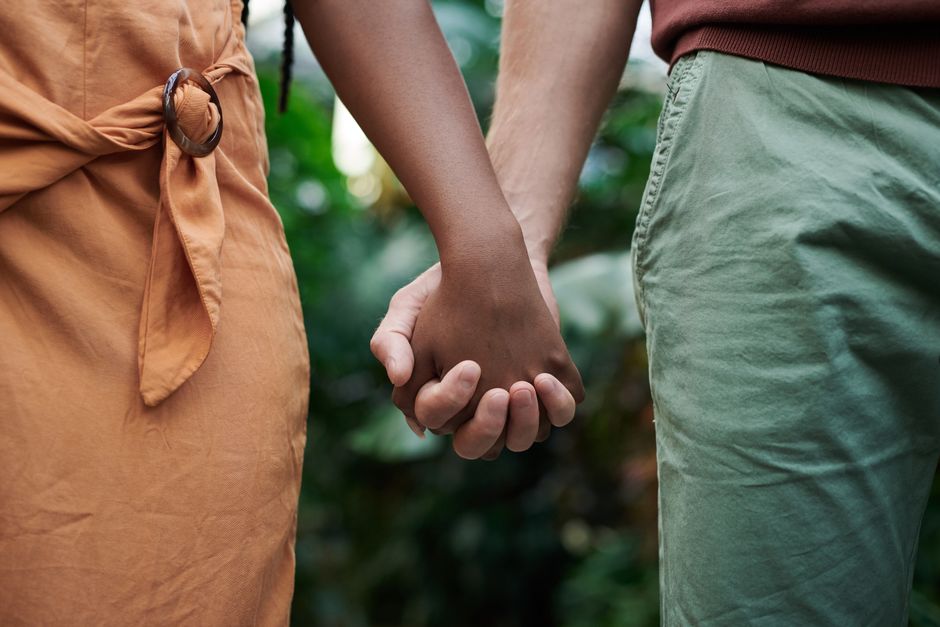
She took my hand on the center console. Her fingers were warm and her nails were short — she bites them when she’s anxious, always has — and she said, “You are not broken. The medication is doing something to your body. That’s not you. That’s chemistry.”
Nobody had ever said that to me. Not my doctor, who wrote the prescription and moved on. Not my friends, because we don’t talk about this. Not the internet, which is full of ads and not enough honesty. My wife, in a gas station parking lot in East Texas, said the thing I had needed to hear for two years.
How Vulnerability Changed Our Relationship
We drove the rest of the way to Marfa over two days. We stopped at bad motels and good taco stands. We saw the Prada sculpture on the side of the highway and laughed because it was smaller than we expected. And we talked. Not the way we talked at home — over the noise of the dishwasher, between bedtime routines, during the seven-minute window before one of us fell asleep. We talked the way we used to when we were dating. Slow. Unguarded. Like two people who were choosing each other again instead of just defaulting to each other.
She told me about a dream she’d had where she was swimming in open water and could see the bottom but never reach it. I told her about the night I almost walked out of the restaurant for good, how I stood in the alley behind the kitchen and cried into my apron because I was so tired of being strong for everyone. We talked about desire — not in a clinical way, but honestly, the way you talk about something you’ve been afraid to name. She said she wanted to feel wanted. I said I wanted to feel capable. And somewhere in the overlap of those two fears, we found each other again.
On the last night, in a motel room in Marfa with thin curtains and a window unit that rattled, we lay in bed and just held each other. It wasn’t about performance or expectation. It was about presence. About saying, with our bodies, what we had finally learned to say with words: I’m here. I see you. I’m not going anywhere.
I made her a plate that night. I had brought a small cooler with some things from the restaurant — pickled shrimp, a little remoulade, some good bread. I sat on the edge of the bed and watched her eat and she looked up at me and smiled and it was the look. The one I thought I had lost. It had been there the whole time, waiting on the other side of a conversation I had been too afraid to start.
What I Know Now About Being Honest
We’ve been home for three months now. The kids are still loud. The restaurant is still demanding. The bathroom still leaks. But something is different. I come home and I sit on the porch with her, even when I’m tired. She tells me when she needs space, and I don’t take it personally. I told my doctor about the side effects, and he adjusted my prescription. I am learning, slowly, that being vulnerable with your partner is not a one-time event. It’s a practice. It’s choosing, every day, to say the true thing instead of the easy thing.
Last week, she texted me at work. Just a small message in the middle of the lunch rush. It said: “I’m afraid the porch swing is going to break.” I laughed out loud in the middle of plating a redfish. Because she wasn’t afraid of the porch swing. She was telling me she was still in it. Still playing the game we started on that drive. Still willing to say the scary thing first.
I texted back: “I’m afraid I put too much cayenne in the bisque.”
She replied: “You always do. I love you.”
That’s the whole story. No big revelation. No dramatic before-and-after. Just two people in a rented car who decided to stop being polite and start being honest. The road trip ended, but the conversation didn’t. And I think that’s the point. The vulnerability isn’t the destination. It’s the willingness to keep driving.
Have your own Hi-Moment to share? We’d love to hear it. Send your story to [email protected], or tag us on Instagram with #MyHighlightTime. You may also enjoy: After 18 Years, We Relearned Each Other and How to Talk to Your Partner About Trying Something New. All submissions are anonymized and edited with care.