My Highlight Time is a HiMoment column where real readers share the small, often unspoken moments of self-care, connection, and discovery that shaped them. Names have been changed to protect privacy.
How I Learned to Love My Postpartum Body — A Real Story
By Tanya, 34 — Oakland, CA
Postpartum body acceptance wasn’t something I woke up and decided to have. It came to me slowly, reluctantly, on a Thursday morning in March while I was standing in front of the bathroom mirror with wet hair and a towel that didn’t quite close the way it used to. My daughter was seven months old. The house was quiet for the first time in what felt like weeks. And I looked down at the silvery lines running across my belly and, for the first time, didn’t flinch.
I want to tell you that moment was cinematic. That I cried happy tears or felt a rush of self-love wash over me. But it was smaller than that. Quieter. I just stood there and thought: these are mine. Not something that happened to me. Not damage. Just mine.
When I First Saw My Postpartum Body
I’m a photographer. I’ve spent the better part of a decade looking at bodies through a lens, adjusting light to make skin glow, finding beauty in the angles most people try to hide. I’ve told dozens of women to stop sucking in their stomachs during shoots. I’ve whispered “you look incredible” to strangers and meant it every time.
But when it was my body? I couldn’t find the generous eye.
The first few weeks after Nola was born, I avoided mirrors the way you avoid an ex at a party — strategic glances, never the full picture. I showered with the lights dimmed. I dressed in the closet. My husband, Dev, would reach for my waist in bed and I’d shift his hand up to my shoulder like I was redirecting traffic.
It wasn’t that I hated my body. It was more like I didn’t recognize it. The soft belly where muscle used to be. The wider hips. The stretch marks that spread across my lower abdomen like a river delta on a map I never asked to carry. I kept waiting to “bounce back,” because that’s the phrase everyone uses, as though your body is a rubber band and not a whole living thing that just grew a person.
The Guilt of Wanting Time for Myself
Around month four, the exhaustion settled into something deeper. Not just tired — disconnected. I was breastfeeding around the clock, running on two-hour sleep cycles, and performing a version of competence that felt paper-thin. I loved my daughter with a ferocity that scared me. But I had completely lost contact with myself as a person who existed outside of her needs.
My friend Keisha — the kind of friend who texts you at midnight just to say “you’re doing fine” — told me I needed to start taking time that was mine. Not productive time. Not “while the baby naps I’ll do laundry” time. Time with no purpose except being in my own body again.
I resisted. Of course I did. Because there’s this unspoken rule that new mothers aren’t supposed to want things for themselves. You’re supposed to be so full of love for your child that your own needs dissolve. And for a while, mine did. But dissolution isn’t the same as fulfillment. I was pouring from an empty cup, and the cup had cracks I was pretending not to see.
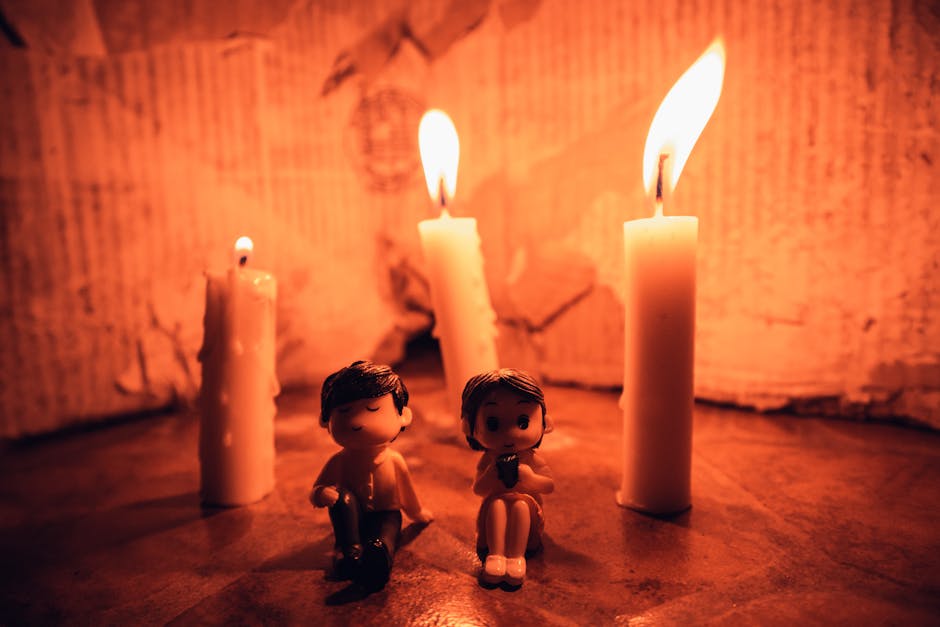
The first night I tried, Dev took the baby monitor and I ran a bath. Hot water. Door locked. I brought a candle — the fancy one someone had given us as a baby shower gift, which felt like an odd choice at the time but suddenly made perfect sense. I sank in and just stayed there. I didn’t scroll my phone. I didn’t make a mental grocery list. I just existed in the heat and the quiet.
I cried for about ten minutes. Not sad crying. Just release. Like my body had been waiting for permission to feel something other than useful.

What Body Acceptance Actually Feels Like
The bath became a ritual. Twice a week, after Nola went down, I’d disappear for forty-five minutes. At first I felt guilty — like I was stealing time from my daughter, from Dev, from the dishes in the sink. But Dev started calling it “Tanya Time” and would practically push me toward the bathroom. “Go,” he’d say. “We’re fine. Go be a person.”
Slowly, in those baths, I started looking at my body again. Not through my camera lens. Not through the filter of what it used to look like. Just looking. I’d run my hands over my stomach and feel the texture of the stretch marks — slightly raised, like Braille. I’d press my palms against my thighs and notice how solid they felt. I started doing this thing where I’d name what I saw without judgment. Soft belly. Wider hips. Faint silver lines. Just naming, not narrating.
One evening, maybe six months in, I brought a small wellness device into the bath with me — something waterproof I’d ordered during a late-night scroll through a self-care site. I’d been curious for weeks but kept talking myself out of it. Too indulgent. Too selfish. Too something. But Keisha’s voice was in my head: time with no purpose except being in your own body.
And that’s what it became. Not a grand revelation. Just thirty minutes of being present in a body I’d been avoiding. Feeling warmth and vibration and my own breath and nothing else. No one needed me. No one was crying. I was just a woman in a bath, reconnecting with skin I’d spent months treating like a stranger’s.
I thought of something my therapist had said weeks earlier — that healing doesn’t always look the way we expect it to. Sometimes it looks unremarkable. Sometimes it looks like a weeknight alone, choosing to feel instead of numbing out. She was right. It looked exactly like that.
Learning to Love My Body After Baby
That Thursday morning in March — the one I started with — wasn’t the first time I’d looked at my stretch marks. But it was the first time I looked at them without the running commentary. Without the “I should try that cream” or “maybe if I lost ten pounds” or “I used to look different.” I just looked.
They were silver and faintly iridescent in the bathroom light. They curved and branched. They looked, honestly, like the work of someone who knew what they were doing. Like the body had made a decision and followed through.
I picked up my camera that afternoon for the first time in months. Not for a client. I set it on a tripod in the bedroom, afternoon light coming through the blinds, and took a self-portrait. Bare stomach. No filter. No strategic angle. I didn’t look at the image for two days. When I finally did, I sat with it for a long time.
The woman in the photo didn’t look broken or damaged or in need of bouncing back. She looked like someone who had done something extraordinary with her body and was still here, still standing in good light, still worth photographing.
I printed it. It’s in a frame on my dresser now, behind a bottle of lotion and a teething ring. Nobody asks about it. It’s just there. A quiet record of a morning I decided my body wasn’t a problem to solve.
What I’d Tell Another New Mom
I won’t pretend I’ve arrived at some permanent state of self-love. There are still mornings I tug at my jeans and sigh. Still moments I catch myself comparing my waist to a stranger’s on the train. The difference is that I don’t spiral anymore. I notice the thought, and I let it pass, the way you let a cloud cross the sun without assuming the day is ruined.
If you’re reading this and you’re in the thick of it — new baby, new body, no sleep, no sense of self — I want to tell you something that took me seven months to learn: you don’t have to love your body right now. You don’t have to stand in front of a mirror and recite affirmations that feel hollow. You just have to stop punishing it. Stop hiding from it. Start with thirty minutes in a locked bathroom with hot water and no agenda. Start with your own hands on your own skin, not to fix anything, just to say: I’m still here.
The acceptance doesn’t come in a wave. It comes in small, ordinary moments. A bath on a Tuesday. A photo in good light. A morning where you look at what your body carries and, for the first time, you don’t look away.
You call it yours. Because it is.
Have your own Hi-Moment to share? We’d love to hear it. Send your story to [email protected], or tag us on Instagram with #MyHighlightTime. You may also enjoy: How to Actually Relax When You’re Alone and 32 Years to Learn How to Date Myself. All submissions are anonymized and edited with care.