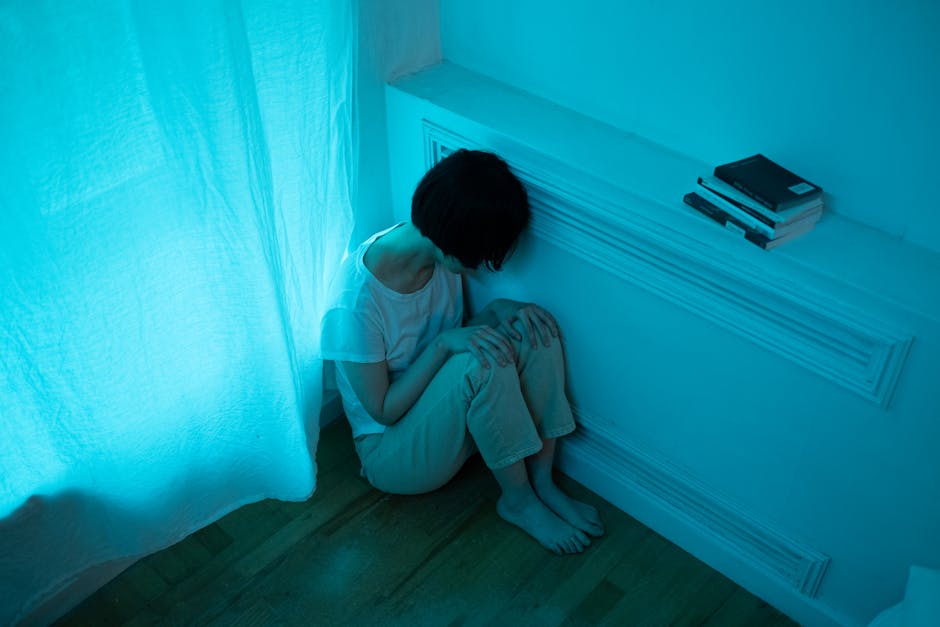
When the Body Goes Quiet, It Might Be Speaking the Loudest
There is a particular kind of silence that settles into a relationship when depression arrives — not the comfortable quiet of two people resting together, but something heavier, something that makes the space between bodies feel wider than it is. If you or your partner have noticed that desire has dimmed alongside mood, you are not broken. You are navigating one of the most common and least discussed intersections of mental health and intimacy.
This conversation matters because depression and libido are deeply intertwined — biologically, emotionally, and relationally. Understanding that connection can be the first step toward finding your way back to each other, and back to yourself. In the pages ahead, psychiatrists and mental health experts offer insight into why this happens, what it means, and how couples can move through it with patience and grace.
A Morning You Might Recognize
Picture a Saturday morning. Sunlight filters through the curtains, and there is nowhere either of you needs to be. In another season of life, this would have been an invitation — a slow, unhurried beginning to the day. But lately, one of you turns away. Not out of rejection, but out of something harder to name. The desire is not gone so much as buried, pressed beneath a weight that has nothing to do with attraction and everything to do with the fog that has settled over ordinary life. Meals taste duller. Laughter comes less easily. And the body, which once reached toward closeness without thinking, now hesitates — not from lack of love, but from a kind of exhaustion that runs deeper than sleep can fix.
If this scene feels familiar, you are far from alone. Research consistently shows that a significant majority of people living with depression experience some shift in sexual desire. It is one of the most common symptoms, and yet it remains one of the least spoken about — even between partners who share everything else.
The Question That Sits Between You
When desire fades, the questions it leaves behind can be more painful than the absence itself. The partner experiencing depression may wonder: Is something wrong with me beyond what I already know? Am I failing at this too? The other partner may quietly ask: Is it me? Have they stopped wanting me? Are we losing something we cannot get back?
These questions tend to grow in silence. Without understanding the biological and psychological roots of what is happening, both partners can spiral into narratives of blame — self-directed or otherwise. The truth is far more nuanced, and far more hopeful, than those late-night fears suggest.
Depression alters brain chemistry in ways that directly affect desire. Serotonin, dopamine, and norepinephrine — the neurotransmitters involved in mood regulation — are also key players in arousal and pleasure. When depression disrupts their balance, the body’s capacity for wanting and responding to intimacy can shift dramatically. This is not a character flaw. It is neurochemistry.
What Psychiatrists Want You to Understand
Mental health professionals who specialize in the intersection of depression and intimacy emphasize one point above all others: changes in libido during a depressive episode are a symptom, not a verdict. They are as much a part of the illness as fatigue or difficulty concentrating, and they deserve the same compassion.
“When we talk about depression and libido, we are really talking about the brain’s reward and motivation systems being temporarily disrupted. Desire is not just a feeling — it is a neurological event. When depression dampens that circuitry, it is not a reflection of how someone feels about their partner. It is the illness doing what it does to every source of pleasure and motivation in a person’s life.”
Psychiatrists also note that the relationship between antidepressants and sex drive adds another layer of complexity. Selective serotonin reuptake inhibitors, or SSRIs, are among the most commonly prescribed treatments for depression — and they are also among the medications most frequently associated with sexual side effects. Estimates suggest that anywhere from thirty to seventy percent of people taking SSRIs experience some change in desire, arousal, or the ability to reach orgasm.
This creates a painful paradox: the medication that lifts the fog of depression may also mute the body’s capacity for pleasure. Many people quietly stop taking their medication rather than discuss this side effect with their doctor — a decision that can have serious consequences for their mental health.
Experts urge a different path. “There are options,” psychiatrists consistently note. Dosage adjustments, switching to a different class of medication, adding supplementary treatments, or exploring the timing of doses can all make a meaningful difference. The key is honest communication with a prescriber who takes sexual wellness seriously as a component of overall health. Antidepressants and sex drive do not have to be an either-or equation.

Practical Ways to Move Through This Together
Navigating mental health intimacy challenges is not about forcing desire back into existence. It is about creating conditions where connection can show up in whatever form feels possible today — and trusting that the landscape will shift as healing continues. Here are some approaches that psychiatrists and couples therapists recommend.
1. Name What Is Happening — Out Loud, Together
The most corrosive element in the depression-and-libido dynamic is not the loss of desire itself — it is the silence around it. When neither partner names what is happening, both fill the void with their own worst assumptions. Find a low-pressure moment — not in bed, not after a rejected advance — and say something simple and true. “I want you to know that my body feels different right now, and it is not about you.” Or, from the other side: “I have noticed we have been less close physically, and I want to understand what you are going through.” These sentences are not easy. They are also the beginning of everything that comes next.
2. Redefine Intimacy Beyond the Bedroom
When the usual pathways to physical closeness feel blocked, couples often retreat from all forms of touch — and that withdrawal can deepen the sense of isolation for both partners. Psychiatrists suggest deliberately maintaining what researchers call “non-demand touch”: contact that carries no expectation of escalation. Holding hands during a walk. A long embrace in the kitchen. Sitting close enough on the couch that shoulders touch. These small, sustained points of contact keep the neural pathways of bonding active and remind both partners that closeness is not contingent on desire. Mental health intimacy begins with presence, not performance.
3. Talk to Your Doctor as a Team
If antidepressants and sex drive changes are part of the picture, consider attending a psychiatry appointment together — or at minimum, discussing medication side effects openly at home. When both partners understand the pharmacological landscape, the experience becomes a shared challenge rather than a private shame. Many psychiatrists welcome this kind of collaboration because it leads to better treatment adherence and more honest reporting of side effects. You are not complaining about your medication. You are advocating for a treatment plan that supports your whole life.
4. Release the Timeline
One of the most damaging pressures couples face is the unspoken expectation that desire should return on a specific schedule — once the medication kicks in, once the therapy starts working, once the season changes. Healing is nonlinear, and so is the return of libido. Some weeks will feel like progress; others will feel like starting over. Psychiatrists emphasize that patience is not passive. It is an active, daily choice to stay present with your partner and with reality as it currently is, rather than measuring every day against an imagined “normal” that may itself need redefining.
5. Seek Support Beyond Each Other
Depression can make a relationship feel like a closed system — just the two of you, managing something enormous in private. But mental health intimacy challenges benefit enormously from outside perspective. Individual therapy for the partner experiencing depression, couples counseling for the relationship, or even a trusted support group can distribute the weight more evenly. Asking for help is not an admission that your relationship is failing. It is evidence that you are both willing to fight for it.
Tonight’s Invitation
Before you fall asleep tonight, try this: turn toward your partner — or toward yourself, if you are navigating this alone — and place one hand over your heart. Take three slow breaths. With each exhale, silently acknowledge one thing that is true right now without judging it. Maybe it is “I am tired.” Maybe it is “I miss how things felt.” Maybe it is “I am still here.” You do not need to fix anything tonight. You only need to notice where you are, and to let that be enough for now.
A Final Thought
Depression has a way of making everything feel permanent — as though the fog will never lift, the distance will never close, the body will never again feel like a place of pleasure and possibility. But that is the illness talking, not the truth. The truth, as psychiatrists will tell you, is that depression and libido exist in a dynamic, shifting relationship — one that responds to treatment, to time, to tenderness, and to the quiet courage of two people who refuse to let silence become the final word. Whatever you are feeling right now is valid. And whatever comes next begins with the gentlest possible act: being honest about where you are, and believing that where you are is not where you will stay.