What to Do When You Discover a Partner’s Porn Use
Discovering a partner’s porn use can feel like the ground has shifted beneath your relationship. You may be questioning your desirability, your connection, and whether the intimacy you shared was ever real. According to sex therapists, this reaction is entirely normal — and it does not mean your relationship is broken. Rebuilding trust and desire after this discovery is possible, and it begins with understanding what you are actually feeling.
In this article, we explore why pornography discovery affects relationships so deeply, what sex therapists want you to know about the emotional aftermath, and practical steps couples can take to rebuild desire and trust together — without shame, blame, or ultimatums.
The Scene You Might Recognize
It often starts quietly. Maybe you picked up their phone to check the time and saw an open tab. Maybe the browser history told a story you were not expecting. Or maybe they told you themselves, haltingly, after weeks of distance you could not quite name. Either way, there is a before and an after. In the after, everything feels different — the way they look at you, the weight of their hand on your shoulder, the silence that fills the bedroom. You are not sure if you are angry, heartbroken, or simply confused. You might be all three at once.
What most people do not talk about is how physical the reaction can be. Your chest tightens. Your appetite disappears. You replay moments from your intimate life together, wondering what was genuine. This is not an overreaction. This is your nervous system responding to a perceived breach in safety — and understanding that response is the first step toward healing.
Is It Normal to Feel Betrayed by a Partner’s Porn Use?
One of the most common questions sex therapists hear is whether the intensity of the emotional reaction is justified. Many people feel embarrassed by their own pain, wondering if they are being too sensitive or old-fashioned. The truth is that feelings of betrayal after discovering a partner’s pornography use are remarkably common and psychologically well-documented. Research in relationship psychology refers to this as a “disclosure trauma” — the shock of learning something that reshapes your understanding of shared reality.
It is not the pornography itself that causes the deepest wound. It is the secrecy. The sense that an entire dimension of your partner’s inner life was hidden from you. For many people, this secrecy triggers the same attachment alarm bells as an emotional affair. You are not overreacting. You are responding to a real rupture in the trust that intimacy requires.
Sex therapists emphasize that the path forward depends not on whether pornography is “right” or “wrong,” but on how both partners are willing to engage with honesty, vulnerability, and a shared commitment to understanding each other’s needs.
What Sex Therapists Actually Say About Partner Porn Use
Clinical perspectives on pornography in relationships have evolved considerably. Rather than categorizing it as inherently harmful or perfectly harmless, most sex therapists today take a relational approach — they look at how pornography functions within a specific relationship and what meaning each partner assigns to it.
“The discovery itself is rarely the core issue. What matters most is the conversation that follows. When couples can move past the initial shock and into genuine curiosity about each other’s inner worlds — their desires, fears, insecurities — that is where real intimacy begins to rebuild. Pornography use becomes a doorway into deeper honesty, not an endpoint.”
This perspective may feel counterintuitive in the immediate aftermath of discovery. But therapists consistently report that couples who use this moment as a catalyst for authentic conversation often emerge with a stronger, more honest connection than they had before. The key is creating conditions where both partners feel safe enough to be truthful — about what they want, what they fear, and what has been missing.
It is also worth noting that sex therapists distinguish between casual use and compulsive patterns. If a partner’s pornography use is interfering with daily functioning, emotional availability, or the ability to be present during intimacy, that signals a different clinical concern that may benefit from individual therapy alongside couples work.

Practical Ways to Rebuild Trust and Desire After Porn Discovery
Healing does not happen in a single conversation. It unfolds through small, repeated acts of honesty and care. Sex therapists recommend the following practices for couples navigating this territory — not as a formula, but as gentle starting points.
1. Name the Feelings Without Assigning Blame
Before you can rebuild, you need to understand what was disrupted. Sit with your feelings — write them down if it helps — and try to identify what specifically hurts. Is it the secrecy? The fear of not being enough? A sense of lost control? When you can name the feeling precisely, you can communicate it to your partner without it becoming an accusation. Therapists call this “leading with vulnerability.” Instead of “How could you do this to me?” try “I feel unsafe right now, and I need you to help me understand.” This shift in language opens a door rather than building a wall.
2. Create a Structured Honesty Practice
Many couples struggle because they have never developed a framework for difficult conversations. Sex therapists often recommend scheduled check-ins — brief, weekly conversations where both partners can share what they are feeling without interruption or defense. The structure matters. Set a timer for ten minutes each. Use “I” statements. Agree in advance that the goal is understanding, not resolution. Over time, these conversations build a muscle for honesty that extends far beyond the original discovery. They become a foundation for the kind of emotional transparency that deepens desire naturally.
3. Reconnect Through Non-Sexual Touch
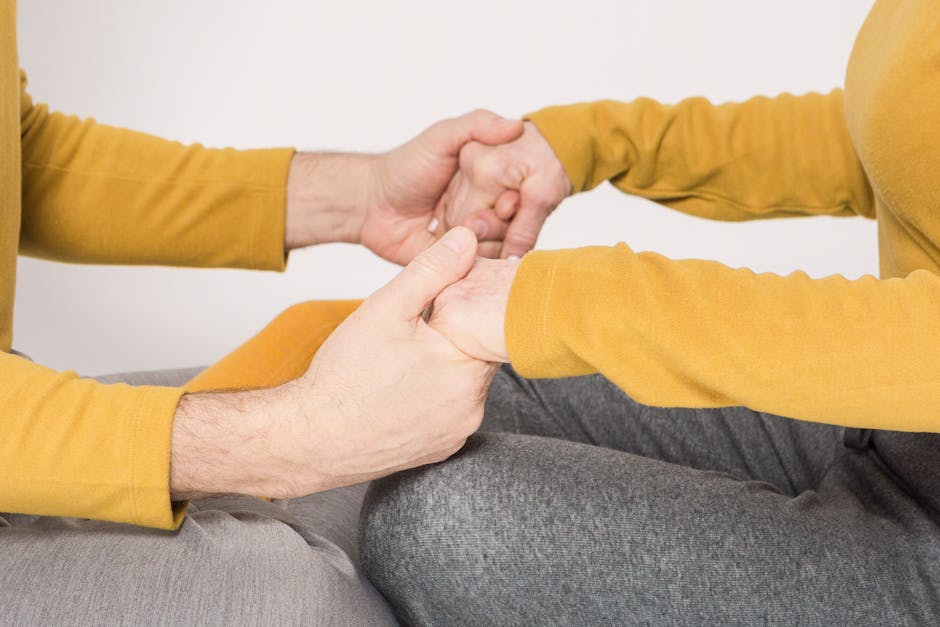
After a trust rupture, the bedroom can feel like a minefield. Many couples try to rush back to physical intimacy as proof that things are “okay,” but this often backfires. Instead, sex therapists recommend rebuilding physical connection through non-sexual touch first. Hold hands during a walk. Sit close on the couch. Offer a shoulder massage without expectation. These small gestures reactivate the attachment system — the same system that was disrupted by the discovery — and gradually rebuild the felt sense of safety that desire requires. Learning to communicate about physical needs is a skill that serves every stage of this process.
4. Explore Your Own Relationship with Desire
One of the most overlooked aspects of this experience is the opportunity it creates for self-exploration. The discovery often forces you to confront your own assumptions about desire, fantasy, and what you need to feel connected. What does desire mean to you? When did you last feel truly wanted — and what made that moment different? Sex therapists encourage both partners to engage with these questions individually. Journaling, solo reflection, or even individual therapy can help you arrive at a clearer understanding of your own intimate landscape. This clarity is not just healing — it is the raw material for a more honest and fulfilling connection with your partner.
5. Consider Professional Support
There is no weakness in seeking help. A trained sex therapist or couples counselor can provide the neutral ground and clinical framework that makes difficult conversations safer. They can also help identify patterns — attachment styles, communication habits, unspoken expectations — that may have contributed to the disconnect long before the discovery. If you are unsure where to start, the American Association of Sexuality Educators, Counselors, and Therapists maintains a directory of certified professionals who specialize in exactly these situations.
You May Also Like
- How to Talk to Your Partner About Trying Something New
- After 18 Years, We Relearned Each Other
- Couples Wellness Tech: New Ways to Reconnect
Tonight’s Invitation
Tonight, before you go to bed, place your hand over your own heart for thirty seconds. Feel your breath rise and fall. Then ask yourself — not your partner, not the internet, just yourself — what do I need to feel safe right now? You do not need to answer it fully. You just need to ask. That question, held gently, is where healing begins.
A Final Thought
Discovering a partner’s porn use does not define your relationship — but how you move through it together can. The couples who emerge stronger are not the ones who pretend it never happened. They are the ones who let the rupture become a doorway into deeper honesty. Rebuilding trust and desire is not a straight line. It is a practice — messy, imperfect, and profoundly human. You deserve a relationship where intimacy is built on truth. And that relationship may be closer than you think.