My Highlight Time is a HiMoment column where real readers share the small, often unspoken moments of self-care, connection, and discovery that shaped them. Names have been changed to protect privacy.
How I Started Over After Rehab — A Personal Journey
By Will, 28 — Richmond, VA
Starting over after rehab isn’t what most people imagine. There’s no cinematic moment where you step off a bus and the sunlight hits your face and you know everything will be different. For me, it was standing in the doorway of my old apartment with a rolling suitcase and a plastic bag of toiletries, wondering why the air smelled like someone else’s cooking. I had been gone for ninety days. The plants were dead. The mail was stacked in a cardboard box my neighbor had left inside the door. And I just stood there, holding the handle of my suitcase, not moving.
I didn’t unpack that night. Or the next night. I slept on top of the covers in the clothes I’d traveled in, my suitcase still zipped at the foot of the bed. Not because I was too tired, but because unpacking felt like agreeing to something I wasn’t sure I was ready for. Like saying yes, this is my life again. This is where it happens now.
The Suitcase I Couldn’t Unpack
In rehab, everything runs on a schedule. You wake up at six thirty, you eat at seven, you’re in group by eight. There’s a strange comfort in it — someone else has already decided what your day looks like. The structure holds you the way a cast holds a broken bone. You don’t have to think about what to do next because someone has already thought about it for you.
Coming home dissolves all of that. Suddenly every hour is yours, and every hour is a question. What do I do now? What do I do with my hands? What do I do at nine p.m. on a Wednesday when I used to be three drinks deep and writing bad songs in my bedroom?
The suitcase became this symbol I didn’t ask for. My counselor had told me to take things slow. “You don’t have to rebuild your whole life in the first week,” she said. But nobody tells you that slowness can feel like drowning. That sitting still in your own apartment, sober, with nothing to numb the silence, is one of the hardest things you’ll ever do.
I started small. On the third night home, I unzipped the suitcase but didn’t take anything out. I just looked at the folded shirts and the book I never finished and the little pouch of toiletries they’d let us keep. On the fourth night, I pulled out my toothbrush and put it in the cup by the sink. That was it. That was all I could do. And I told myself that was enough.

What Self-Care Looks Like in Early Sobriety
Before rehab, I didn’t have a concept of self-care. I mean, I’d heard the phrase, but it lived in a world that didn’t include me — a world of bath bombs and face masks and women’s magazines. I was a twenty-seven-year-old guy who played bass in a band that practiced in a storage unit. Self-care, to me, meant remembering to eat before a gig.
But sobriety strips everything back. When you remove the thing you’ve been using to manage your feelings — to celebrate, to mourn, to get through a Tuesday — you’re left with just your body and the hours. And the body has needs you forgot about. Not dramatic needs. Quiet ones. The need to feel warm water on your skin. The need to lie somewhere soft without your heart racing. The need to touch your own face and not flinch.
My counselor had talked about reconnecting with physical sensation as part of recovery. She said a lot of people in early sobriety feel disconnected from their bodies — like they’ve been living from the neck up. That hit me. I’d spent years numbing everything below the surface. I didn’t know what my body actually felt like when it wasn’t flooded with alcohol or withdrawal or anxiety.
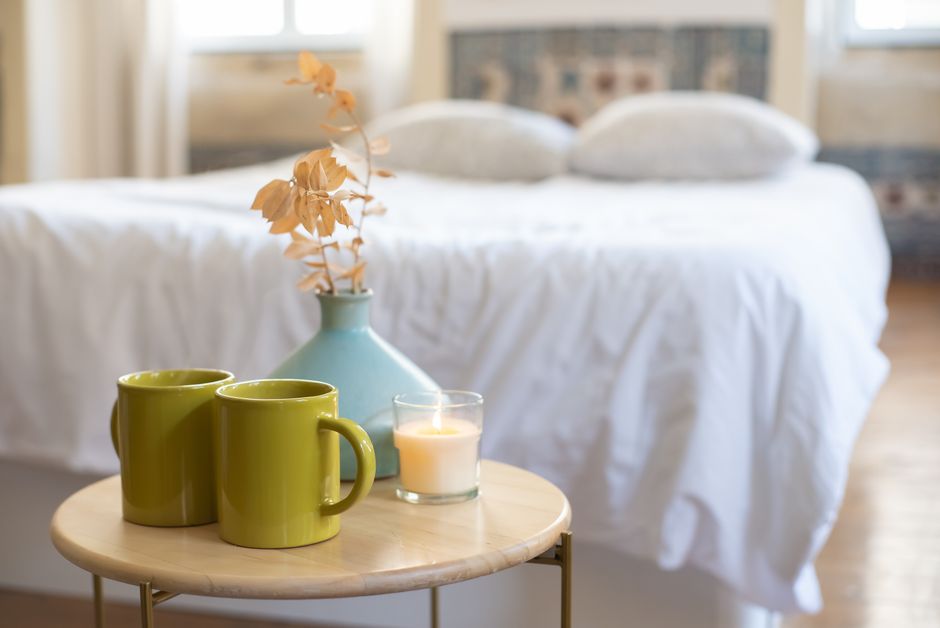
So I started paying attention. I bought new sheets — nothing fancy, just cotton ones that didn’t smell like the last two years of my life. I started showering at night instead of the morning, letting the hot water run until the bathroom got steamy. I’d stand there with my eyes closed, just breathing. Fifteen minutes of nothing. No phone, no music, no noise. Just me and the sound of water. It felt absurd at first. Then it felt necessary. Then it became the only part of my day I actually looked forward to.
One night, about three weeks in, I was lying in bed after one of those showers. The window was cracked, and I could hear the neighbor’s wind chimes and a dog barking somewhere down the block. I wasn’t anxious. I wasn’t craving anything. I was just — there. Present in my own skin. I remember thinking: this is what people mean when they say self-care. Not the products or the routines. The willingness to be in your own body without trying to escape it.
That was around the time I ordered something from HiMoment. I’d seen it online while scrolling late one night — not looking for anything in particular, just trying to fill the hours. It arrived in a plain box, and I put it in the nightstand drawer without thinking much of it. But a few nights later, I used it. Quietly, with the lights off and the window still cracked. And what I noticed wasn’t the sensation itself, exactly. It was that I was allowing myself to feel something good without guilt. Without needing a drink first. Without performing for anyone. That was new.
Learning to Be Alone Without Being Lonely
People don’t talk enough about loneliness in recovery. The rehab brochures mention support networks and accountability partners and the importance of community. And all of that matters. But there are hours — late hours, early hours, Sunday afternoon hours — when it’s just you. And the version of you that shows up in those hours is the one that determines whether you make it.
I lost most of my friends when I went to rehab. Not in a dramatic way. Nobody said don’t call me. They just stopped calling. My bandmates found another bass player. My drinking buddies weren’t really buddies — they were co-conspirators. And the people who loved me, like my mom and my sister, were supportive in the way that family is: they checked in, they said they were proud of me, and they went back to their own lives. Which is fair. I couldn’t expect anyone to sit with me through every empty evening.
So I had to learn to sit with myself. And I’m not going to lie — for the first month, it was brutal. I’d pace the apartment. I’d open the fridge and close it. I’d pick up my bass and put it down. I’d think about calling someone and then not. The silence was physical. It had weight.
But somewhere around week five or six, something shifted. I started building these small rituals that were just mine. The nighttime shower. A cup of chamomile tea in the mug my sister gave me. Twenty minutes of reading before bed — actual reading, not scrolling. And then lying there in the dark, feeling my heartbeat slow down, feeling my body settle into the mattress, feeling safe enough to fall asleep without checking the locks three times.
I started writing again too. Not songs — just sentences. Little observations I’d scribble on the back of grocery receipts or type into my phone. Things like: “The light in the kitchen at 7 a.m. is different from the light at 7 p.m. I never noticed that before.” Or: “I can hear my own breathing now. That used to terrify me. It doesn’t anymore.”
Those sentences became a kind of evidence. Proof that I was paying attention. Proof that I was here.
Starting Over Doesn’t Mean Starting From Nothing
The suitcase finally got unpacked on a Saturday, about five weeks after I came home. I didn’t plan it. I just woke up and the sun was coming through the blinds and I thought: okay. Today.
I took everything out, one item at a time. I folded the shirts that still smelled like the detergent they used in the facility and put them in the dresser. I hung up the jacket my mom brought me the day before I left. I put the book on the nightstand, next to the tea mug and the lamp I’d bought at the thrift store the week before. And when the suitcase was empty, I stood it up in the closet and closed the door.
It wasn’t a breakthrough. It wasn’t a movie scene. It was a man putting his clothes away on a Saturday morning, sunlight on the floor, coffee getting cold on the counter. But it meant something. It meant I was choosing this life. Not the old one. Not the one I’d imagined. This one — the quiet one, the slow one, the one where I go to bed early and wake up without a headache and notice the way light moves through a room.
I’m not going to pretend everything is fixed. I still have hard nights. I still miss the rush of playing a show with a buzz going, the way the bass felt in my chest when the room was loud and I was just gone enough not to care about anything. I miss the ease of it — how simple life was when I didn’t have to feel everything.
But I don’t miss who I was. I don’t miss waking up not remembering. I don’t miss the look on my sister’s face at Christmas two years ago, the one she tried to hide. I don’t miss the weight of pretending.
Recovery isn’t a destination. It’s a Tuesday night. It’s a shower. It’s a cup of tea. It’s lying in the dark and feeling your own heartbeat and not needing it to stop. It’s unpacking a suitcase slowly, one shirt at a time, and deciding that this apartment, this body, this quiet life — it’s worth staying in.
My name is Will. I’m twenty-eight. I live in Richmond, and I play bass, and I’ve been sober for four months and eleven days. And tonight, before I go to bed, I’m going to open the window and listen to the wind chimes and let myself feel whatever comes. That’s my highlight time. It’s small. It’s mine. And it’s enough.
Have your own Hi-Moment to share? We’d love to hear it. Send your story to [email protected], or tag us on Instagram with #MyHighlightTime. You may also enjoy: How to Actually Relax When You’re Alone and At 32, I Finally Learned How to Date Myself. All submissions are anonymized and edited with care.