When Survivor Guilt Makes Intimacy Feel Impossible
Survivor guilt and intimacy rarely appear in the same conversation, but for many couples, the connection between them is painfully real. When one partner carries the weight of having survived something others did not — a loss, an accident, a diagnosis that spared them — closeness with a loving partner can feel undeserved. According to trauma therapists, this quiet withdrawal is one of the most common and least understood barriers to connection in otherwise healthy relationships.
If you or your partner have been living with this invisible weight, this guide explores what happens when guilt takes up space in a relationship — and how couples can gently find their way back to each other.
The Scene You Might Recognize
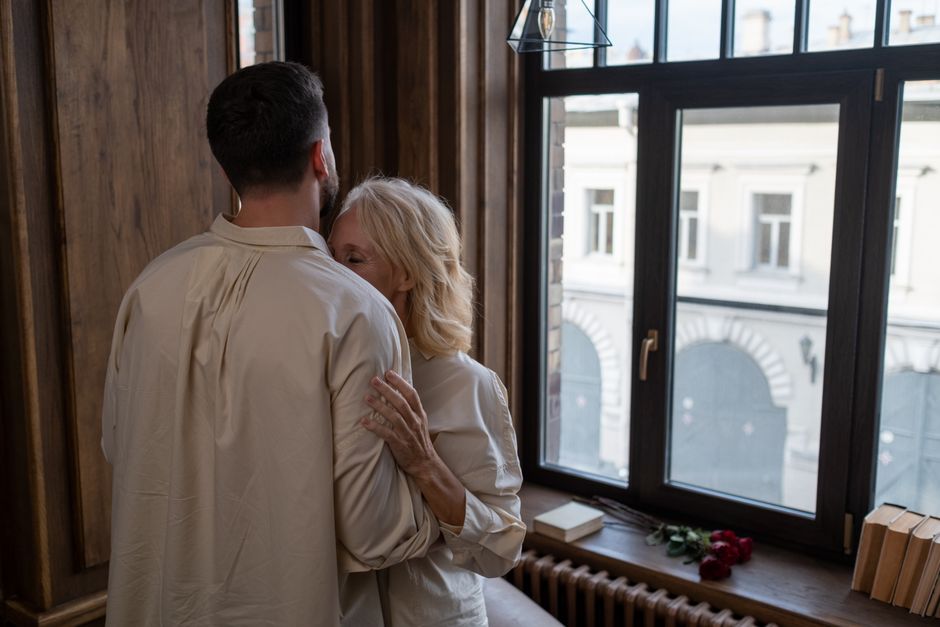
It is a quiet evening. The house is still. Your partner reaches for your hand, and something in you flinches — not from fear, but from a feeling you cannot name. You want to be close. You want to feel their warmth. But somewhere beneath the surface, a voice whispers: you do not deserve this. Not this comfort. Not this peace. Not when someone else did not make it.
Maybe it was a sibling who died young. A friend lost to illness. A colleague who did not survive the same accident. The specifics differ, but the pattern is remarkably consistent: the survivor pulls away from pleasure, from ease, from the very intimacy that could help them heal. And the partner, unsure what they did wrong, begins to pull away too.
Can Survivor Guilt Affect Your Relationship and Intimacy?
This is the question many people carry silently for years. They wonder why they tense up during tender moments. They cannot explain why a loving touch sometimes triggers a wave of shame. They may not even connect it to the loss they experienced — sometimes decades earlier.
Survivor guilt operates beneath conscious awareness. It is not a logical conclusion but an emotional imprint: the deeply held belief that your own happiness comes at someone else’s expense. In the context of intimacy, this belief becomes especially charged. Physical closeness, vulnerability, and pleasure all require a kind of permission — permission to feel good, to let go, to receive. And survivor guilt systematically revokes that permission.
Trauma therapists describe this as a form of “moral injury,” where the survivor’s internal sense of fairness has been disrupted. The result is not just emotional distance but a bodily experience of shutdown. The nervous system, still scanning for threat, interprets pleasure as danger — as something that must be paid for.
What Trauma Therapists Actually Say About Survivor Guilt
Clinicians who specialize in trauma and attachment consistently emphasize that survivor guilt is not a character flaw or a sign of weakness. It is a predictable response to an unpredictable loss. And its effects on intimacy are well documented in both research and clinical practice.
“Survivor guilt often shows up in the body before the mind catches up. A client may describe feeling frozen during a moment of closeness, or suddenly needing to leave the room. They are not rejecting their partner — they are responding to an internal signal that says they have not earned the right to feel safe or held. Healing begins when we name that signal for what it is: grief, not truth.”
This insight reframes the entire experience. The withdrawal is not about the relationship. It is not about attraction or compatibility. It is about an unresolved conversation between the survivor and their own sense of worthiness. Trauma therapists often work with couples to externalize the guilt — to see it as something that visits the relationship rather than something that defines it.
Another common therapeutic observation is that the non-survivor partner frequently develops their own form of guilt: guilt for wanting closeness, guilt for feeling frustrated, guilt for not knowing how to help. This creates a double bind where both partners are holding back, each trying to protect the other from their own pain.

How to Support a Partner With Survivor Guilt — Practical Steps
Rebuilding intimacy when survivor guilt is present requires patience, honesty, and a willingness to move slowly. These are not quick fixes. They are small, repeatable practices that trauma therapists recommend to help couples stay connected while honoring the healing process.
1. Name It Together
One of the most powerful things a couple can do is give the guilt a name — literally. Some therapists encourage clients to refer to the guilt as a separate presence: “The guilt is here tonight” rather than “I do not want to be close.” This simple linguistic shift does two things. It prevents the non-survivor partner from personalizing the withdrawal, and it gives the survivor a way to acknowledge what is happening without being consumed by it. Naming is not solving. It is witnessing. And in the context of intimacy, being witnessed is often the first step toward feeling safe enough to stay present.
2. Redefine What Intimacy Looks Like Right Now
Couples navigating survivor guilt often benefit from expanding their definition of intimacy beyond its physical dimensions. Closeness can be sitting in the same room reading different books. It can be a hand on a shoulder while one partner cries. It can be cooking together in silence. Trauma therapists stress that when physical intimacy feels too charged, these smaller forms of connection keep the relational bridge intact. They signal to the nervous system that closeness does not always require vulnerability at its most exposed. Over time, as the survivor’s window of tolerance expands, physical intimacy can re-enter the relationship on terms that feel earned — not forced.
3. Practice the Pause Before Withdrawal
When the urge to pull away arises, trauma therapists often coach survivors to pause rather than act. Not to push through the discomfort — that can be retraumatizing — but to notice what is happening in the body. Where is the tension? What thought just appeared? Is there a specific memory attached to this moment? This practice, rooted in somatic awareness, helps the survivor build a new relationship with their own nervous system. And when done with a partner who understands, it becomes a shared practice. The partner learns to pause too — to resist the impulse to fix, to reassure, to close the gap. Instead, they simply stay. That staying is itself a form of intimacy permission.
4. Seek Professional Support as a Couple
While individual therapy is essential for processing the original trauma, couples therapy offers something different: a space where the relationship itself is the client. A trauma-informed couples therapist can help both partners understand how guilt has shaped their attachment patterns and offer structured exercises for rebuilding trust and closeness. Modalities like EMDR, somatic experiencing, and emotionally focused therapy (EFT) have shown particular promise for couples where one partner carries survivor guilt. The goal is not to eliminate the guilt — that may never fully happen — but to reduce its power over intimate moments.
5. Create Rituals of Return
After a difficult night — one where the guilt won and closeness felt impossible — many couples benefit from a “ritual of return.” This might be a morning coffee shared in quiet. A brief text during the workday that says, “Last night was hard, and I am still here.” A walk together in the evening. These rituals communicate a message that survivor guilt works hard to obscure: that the relationship can hold both the grief and the love. That one does not cancel out the other. Over time, these small returns accumulate into something larger — a felt sense of safety that the guilt alone cannot dismantle.
You May Also Like
- How Childhood Emotional Neglect Shapes Adult Intimacy
- Dissociation During Intimacy: How to Stay Present
- Emotional Affair Recovery and Rebuilding Trust
Tonight’s Invitation
If something in this article resonated, consider this: tonight, instead of reaching for closeness or retreating from it, simply tell your partner one true thing about how you are feeling. It does not need to be polished. It does not need to lead anywhere. Just one honest sentence, offered without expectation. That sentence is not a solution. It is a beginning — a small act of intimacy permission that says, “I am here, even when it is hard to stay.”
A Final Thought
Survivor guilt asks you to believe that your happiness is a betrayal. But the therapists, researchers, and couples who have walked this path will tell you something different: that allowing yourself to be loved is not a rejection of the person you lost. It is a way of honoring the life you still have. Healing does not mean forgetting. It means learning, slowly and gently, that you are allowed to stay in the room — and that the person beside you wants you there. That is not guilt’s territory. That is love’s.